

Order cipro best price cheap
- Is Cipro available without prescription in the UK?
- What does Prescription Only Medicine mean in the UK?
- General information about ciprofloxacin
- How Cipro works against bacteria
- Price and availability information
- Strengths, formulations and pack types
- Common infections treated with Cipro
- UK legal classification: POM and exceptions
- Alternatives and adjuncts to ciprofloxacin
- Cipro compared with other antibiotics
- Food, alcohol and lifestyle considerations
- Side effects and tolerability
- Long-term use, resistance and overuse
- Warnings, contraindications and interactions
- Additional information about Cipro
Is Cipro available without prescription in the UK?
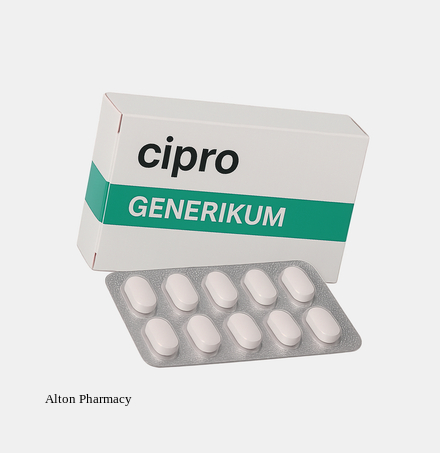
Ciprofloxacin, commonly known by the brand name Cipro, is a broad-spectrum antibiotic in the fluoroquinolone class. In the United Kingdom, ciprofloxacin is classified as a Prescription Only Medicine (POM). This means that you cannot legally buy, purchase or order generic Cipro without prescription from a registered healthcare professional. Unlike some over-the-counter medicines, Cipro requires medical assessment to confirm that its potent antibacterial activity is appropriate, effective and safe for each individual case. Purchasing antibiotics online without prescription is not only against UK law but can pose significant health risks, including antibiotic resistance and adverse drug events if used incorrectly.
Alton Pharmacy recommends that patients seeking cheaper or generic Cipro consult their GP or a private prescriber to obtain a valid prescription. Once you have a prescription, you can order Cipro online at competitive prices, often cheaper than high-street pharmacies, with delivery across the UK.
What does Prescription Only Medicine mean in the UK?
In the UK, there are three main legal categories for the supply of human medicines: General Sales List (GSL), Pharmacy medicines (P) and Prescription Only Medicines (POM). POMs can only be sold or supplied in accordance with a valid prescription issued by an authorised prescriber, which includes doctors, dentists, certain nurses, and pharmacists under Patient Group Directions or independent prescribing rights. Ciprofloxacin’s classification as a POM reflects its systemic antibiotic activity, potential for serious side effects, and the necessity for targeted use to reduce antibiotic resistance.
Attempting to buy or purchase POM antibiotics such as Cipro without a prescription is illegal and can result in confiscation of the medicine, fines, or other enforcement actions. Always ensure you obtain a prescription before placing an order online.
General information about ciprofloxacin
What is ciprofloxacin?
Ciprofloxacin is an antibacterial agent used to treat a variety of infections. It belongs to the fluoroquinolone family of antibiotics, which interfere with bacterial DNA replication, leading to bacterial cell death.
What does “fluoroquinolone” mean?
Fluoroquinolones are a subgroup of quinolone antibiotics. They are characterised by a fluorine atom at a specific position in their molecular structure, enhancing their potency and spectrum of activity against Gram-negative and certain Gram-positive bacteria.
What is the active substance?
The active pharmaceutical ingredient is ciprofloxacin hydrochloride, typically formulated as tablets or oral suspension. Generic versions contain the same active ingredient and must meet strict regulatory standards for efficacy, safety and quality.
Why is formulation important?
Ciprofloxacin can be formulated in film-coated tablets to ensure stability and acceptability. Other formulations include oral suspension for patients unable to swallow tablets. Each presentation is designed to ensure reliable absorption and bioavailability.
Is Cipro a broad-spectrum antibiotic?
Yes. Cipro exhibits broad-spectrum activity, meaning it can act against a wide range of bacterial pathogens. This versatility is one reason why it is commonly stocked in hospital and community settings for selected indications.
Why can fluoroquinolones have serious side effects?
While effective, fluoroquinolones can affect cartilage, tendons and the central nervous system in rare cases. UK prescribing guidelines reserve fluoroquinolones for situations where alternative antibiotics are unsuitable or have failed, emphasising the importance of professional oversight.
How Cipro works against bacteria
What is DNA gyrase?
DNA gyrase and topoisomerase IV are key bacterial enzymes responsible for winding and unwinding DNA strands during replication and transcription. Fluoroquinolones inhibit these enzymes, blocking DNA synthesis and causing bacterial cell death.
How does ciprofloxacin inhibit bacterial growth?
Ciprofloxacin binds to the DNA gyrase–DNA complex, stabilising a cleaved intermediate that prevents DNA ligation. This leads to double-strand DNA breaks and bacterial apoptosis. Its high affinity for these enzymes underlies its potent bactericidal effect.
Does Cipro act on all bacteria?
No. Cipro is highly effective against many Gram-negative bacteria and some Gram-positive strains, including Escherichia coli, Pseudomonas aeruginosa and certain Staphylococcus species. However, it is less active against anaerobic bacteria and atypical pathogens.
How is bacterial resistance relevant?
Resistance emerges through mutations in target enzymes or efflux pumps that expel the drug. Inappropriate or prolonged use of Cipro can select for resistant strains, reducing its effectiveness. UK guidelines emphasise targeted prescribing based on culture and sensitivity results where possible.
Is absorption affected by stomach pH?
Ciprofloxacin is best absorbed in the small intestine. Co-administration with antacids containing aluminium, magnesium or calcium can bind the antibiotic and reduce absorption. Patients should take Cipro at least two hours before or four hours after such products.
How is Cipro metabolised and excreted?
Ciprofloxacin is partially metabolised in the liver and eliminated primarily by renal excretion. Dose adjustments may be needed for patients with moderate to severe renal impairment to avoid accumulation and toxicity.
Price and availability information
How much does Cipro cost in the UK?
Prices for ciprofloxacin vary depending on brand, pack size, formulation and whether it is generic or branded. Alton Pharmacy offers competitive online pricing for generic Cipro, often cheaper than branded alternatives. All prices are indicative and subject to change; for current price and availability, please enquire directly.
Why can the price differ between pharmacies?
Differences reflect wholesale acquisition costs, retailer mark-up, promotions and distribution expenses. Generic Cipro can be significantly cheaper, often offering the same active ingredient and efficacy at a lower price.
| Example | Strength | Formulation | Price (GBP) | Status | Note |
|---|---|---|---|---|---|
| Example A | 500 mg | Film-coated tablets, 10-pack | £15.99 | Generic | Order online for delivery |
| Example B | 750 mg | Film-coated tablets, 10-pack | £19.49 | Branded | Prescription required |
| Example C | 250 mg/5 mL | Oral suspension, 100 mL | £18.50 | Generic | Shake well before use |
Strengths, formulations and pack types
What strengths of ciprofloxacin exist?
Ciprofloxacin is marketed in multiple strengths: 250 mg, 500 mg and 750 mg tablets, plus oral suspension versions (commonly 250 mg equivalent per 5 mL). The indication, patient age and severity of infection determine the optimal strength and dosing interval.
What formulations are available?
Available presentations include film-coated tablets for adults and adolescents, and an oral suspension suitable for pediatric or dysphagic patients. Intravenous formulations exist but are used in hospital settings.
Why does pack size matter?
Pack size correlates with the intended duration of treatment. A standard course might range from 7 to 14 days, depending on the infection. UK authorisations specify maximum pack sizes for each dispensing to ensure appropriate self-care or monitored therapy.
| Feature | Why it matters |
| Strength | Determines dose per administration |
| Formulation | Impacts absorption and patient preference |
| Pack size | Aligns with typical treatment duration |
| Brand vs Generic | Cost differences; same active molecule |
| Dosing schedule | Influences compliance |
Are branded and generic Cipro identical?
Generic ciprofloxacin contains the same active ingredient and meets stringent quality standards. Excipients, tablet appearance and packaging may differ, but therapeutic equivalence is required for regulatory approval.
Common infections treated with Cipro
Which infections respond to ciprofloxacin?
Ciprofloxacin is indicated for urinary tract infections, prostatitis, respiratory tract infections including chronic bronchitis exacerbations, intra-abdominal infections, skin and soft tissue infections, bone and joint infections, and certain gastrointestinal infections. It is reserved for cases where first-line antibiotics are unsuitable or proven ineffective.
Why use Cipro for urinary infections?
Its high urinary concentrations and broad Gram-negative coverage make Cipro effective against Escherichia coli, the most common UTI pathogen. For uncomplicated UTIs, lower doses may suffice, whereas complicated or resistant infections may require higher strength.
Can Cipro treat resistant infections?
Some resistant strains remain vulnerable to fluoroquinolones. Antimicrobial sensitivity testing guides use in multi-resistant infections, ensuring appropriate selection and dose adjustment.
Is Cipro used preventively?
In selected settings, such as high-risk neutropenic patients or malaria prophylaxis, ciprofloxacin may be used. Prophylactic use increases resistance risk and is carefully managed within NHS guidelines.
How long is a typical course?
Most courses last 7–14 days, depending on infection site and severity. Adherence to the full course is critical to avoid relapse and resistance development.
UK legal classification: POM and exceptions
What is a POM?
A Prescription Only Medicine requires a valid prescription. Ciprofloxacin’s POM status reflects its potency, potential side effects and the public health risk of antibiotic resistance.
Are there exceptions for emergency supply?
Under exceptional circumstances, pharmacists may supply a small amount of a POM without a prescription to prevent immediate harm, but this does not apply to antibiotics due to stewardship guidelines. Always secure a prescription before ordering online.
Alternatives and adjuncts to ciprofloxacin
What other antibiotic classes exist?
- Penicillins (e.g., amoxicillin);
- Cephalosporins (e.g., cefalexin);
- Macrolides (e.g., azithromycin, clarithromycin);
- Tetracyclines (e.g., doxycycline);
- Trimethoprim and sulfamethoxazole combinations.
Why choose alternatives?
Selection depends on bacterial sensitivity, patient allergies, drug interactions and site of infection. Clinical guidelines and culture results guide antibiotic choice to minimise resistance and optimise outcomes.
Cipro compared with other antibiotics
How does Cipro compare with amoxicillin?
Amoxicillin is a broad-spectrum penicillin effective against many Gram-positive and some Gram-negative bacteria but not Pseudomonas. Cipro offers superior Gram-negative coverage and better tissue penetration but has more restrictive stewardship guidelines due to resistance risk.
How does Cipro compare with azithromycin?
Azithromycin is a macrolide used for respiratory infections and certain sexually transmitted infections. It has a longer tissue half-life and simpler dosing but is less active against Gram-negative rods than Cipro.
| Feature | Ciprofloxacin | Amoxicillin | Azithromycin |
| Drug class | Fluoroquinolone | Penicillin | Macrolide |
| Main mechanism | Inhibits DNA gyrase | Inhibits cell wall synthesis | Inhibits protein synthesis |
| Gram-negative activity | High | Moderate | Low |
| Standard dose | 500 mg twice daily | 500 mg three times daily | 500 mg once daily |
Is one antibiotic always better?
No. Optimal antibiotic choice depends on infection type, local resistance patterns, patient comorbidities and allergy history. Prescribers weigh efficacy, safety and stewardship considerations.
Food, alcohol and lifestyle considerations
Can diet influence antibiotic efficacy?
While food does not significantly alter ciprofloxacin absorption, dairy products and calcium-fortified juices can bind and reduce bioavailability. It is recommended to separate Cipro doses and high-calcium foods by at least two hours.
Can alcohol affect treatment?
Moderate alcohol consumption does not directly reduce Cipro efficacy, but both can independently stress the liver. Excessive drinking may impair immunity and delay recovery.
Does smoking matter?
Smoking can hinder immune response and delay healing in infections such as pneumonia. Quitting smoking can support antibiotic therapy and overall health.
What about exercise?
Fluoroquinolones can increase the risk of tendon injury, especially with vigorous physical activity. Patients should avoid intense exercise and report tendon pain promptly.
Side effects and tolerability
What side effects can Cipro cause?
Like all antibiotics, ciprofloxacin can cause adverse effects. Most are mild and transient, but some may require medical attention. Always read the patient information leaflet and consult your pharmacist if you experience concerning symptoms.
| System | Possible side effects |
| Gastrointestinal | Nausea, diarrhoea, abdominal pain |
| Nervous system | Dizziness, headaches, insomnia |
| Musculoskeletal | Tendon pain, joint stiffness |
| Skin | Rash, photosensitivity |
| Hypersensitivity | Rare allergic reactions |
Are tendon injuries common?
Fluoroquinolone-associated tendinopathy is uncommon but serious. Elderly patients and those on corticosteroids have higher risk. Report any tendon pain or swelling immediately and discontinue exercise.
Why does photosensitivity occur?
Ciprofloxacin can increase skin sensitivity to sunlight, leading to sunburn. Patients should use sun protection and avoid prolonged UV exposure during treatment.
Long-term use, resistance and overuse
Why is Cipro intended for short courses?
Antibiotic stewardship promotes short, targeted courses to minimise resistance. Prolonged or repeated ciprofloxacin use selects for resistant bacteria, reducing future treatment options.
What are the consequences of overuse?
Excessive antibiotic use can disrupt normal flora, leading to opportunistic infections such as Clostridioides difficile. Resistance may spread in the community, limiting effective therapies for serious infections.
When is a review necessary?
Patients not improving within 48–72 hours of starting Cipro should seek reassessment. Culture results, symptom changes or adverse events may necessitate dose adjustment or antibiotic switch.
Warnings, contraindications and interactions
Who should be cautious with Cipro?
- Elderly patients (risk of tendon injury);
- Patients with a history of tendon disorders;
- Those with known QT prolongation or on QT-prolonging drugs;
- Patients with severe renal impairment (dose adjustment needed);
- Children and adolescents (cartilage safety concerns);
- Pregnant or breastfeeding women (use only if benefit outweighs risk).
Can Cipro interact with other medicines?
Yes. Ciprofloxacin interacts with antacids, sucralfate, iron supplements, multivitamins, probenecid and certain antiarrhythmics. These interactions can reduce efficacy or increase toxicity. Always inform your pharmacist of all medications and supplements you take.
Why is QT prolongation important?
Ciprofloxacin can affect cardiac repolarisation. Concomitant use with other QT-prolonging agents increases risk of arrhythmias. ECG monitoring may be advised for high-risk patients.
What about glucose-lowering drugs?
Fluoroquinolones can cause dysglycaemia when combined with oral hypoglycaemic agents or insulin. Blood glucose monitoring is recommended in diabetic patients during treatment.
Additional information about Cipro
What does “generic ciprofloxacin” mean?
A generic antibiotic contains the same active ingredient and strength as the reference brand (Cipro) and must meet stringent regulatory standards. Generic options often provide a more affordable choice without compromising quality.
Why can generic and brand leaflets differ?
Different manufacturers may include unique excipients and proprietary information in the patient leaflet. Dosing, side effect lists and legal classifications are aligned but formatting and presentation can vary.
Where can UK medicine information be verified?
Authoritative sources include the Medicines and Healthcare products Regulatory Agency (MHRA), the electronic Medicines Compendium (eMC) and qualified healthcare professionals. Always refer to the official Summary of Product Characteristics for precise details.
Does this information replace professional advice?
No. This page provides general guidance by Alton Pharmacy, 68 High Street, Alton, Hampshire GU34 1ET. For personalised advice on buying, ordering or using Cipro, speak to our pharmacy team or your healthcare provider.
All Services
Opening Hours
| Monday – Friday | 9.00 – 19.00 |
| Saturday | 9.00 – 13:00 |
| Sunday | Closed |
| Holidays | Closed |
Quick Contact
- Address 68 High Street, Alton, Hampshire, GU34 1ET
- Email [email protected]
- Phone 01420 83176
